How Post-World Cup Fatigue Will Affect the Start of Europe’s Domestic Leagues
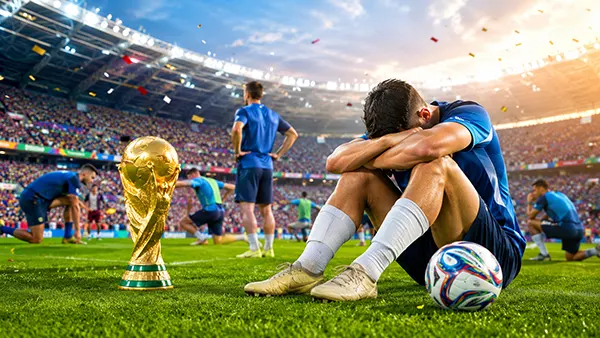
The 2026 FIFA World Cup ended on 19 July after 104 matches across Canada, Mexico and the United States, leaving Europe’s leading clubs with an unusually delicate transition into the 2026/27 domestic season. Spain’s champions, Argentina’s finalists and other players who reached the closing stages returned after six demanding weeks of competition, repeated travel and intense public pressure. The timing matters because La Liga begins on 14–16 August, the Premier League and Ligue 1 start on 21 August, Serie A follows on 22–23 August, and the Bundesliga opens on 28 August. Some internationals therefore have less than a month between their final World Cup match and the first league fixture. The effect will not simply be tired players running more slowly. It is likely to shape holidays, pre-season preparation, team selection, tactical choices and the reliability of early results across Europe.
A Compressed Turnaround After the 2026 World Cup
The 2026 tournament created a heavier summer commitment than earlier 32-team World Cups. Forty-eight national teams took part, the schedule ran from 11 June to 19 July, and the competition covered 16 host cities in three large countries. FIFA arranged the calendar to reduce unnecessary travel and protect recovery time between matches, but geography still mattered. A player could train in one climate, play in another time zone and then move again within days. Even when travel was carefully planned, airport transfers, hotel changes, media duties and disrupted sleep added to the physical cost of matches. For European-based players, the journey home also meant crossing several time zones just as their clubs were beginning the final stage of summer preparation.
The league calendar gives a clear picture of the pressure. A World Cup finalist had only 26 to 28 days before La Liga’s opening weekend, 33 days before the Premier League and Ligue 1 began, around 34 days before the first Serie A matches, and 40 days before the Bundesliga started. Those figures include everything: the flight back, medical checks, a genuine holiday, individual fitness work and reintegration into team training. FIFPRO experts have argued that players need 28 consecutive days away from the football environment during the off-season, while discussions between FIFA and player unions have also recognised the need for at least 21 days of end-of-season holiday. A full four-week break for a finalist would already extend beyond La Liga’s first fixtures and leave almost no collective preparation before the English, French or Italian campaigns.
The burden is also uneven within the same dressing room. Players eliminated in the group stage returned much earlier than those involved in the quarter-finals, semi-finals or final. Non-internationals may have completed a normal five- or six-week pre-season, while a World Cup finalist could arrive when tactical rehearsals and friendly matches were almost finished. This creates two squads inside one squad: one group prepared for immediate competition and another still moving from recovery into training. Coaches cannot treat both groups in the same way without risking either poor conditioning or unnecessary fatigue. The opening weeks will therefore depend less on a club’s strongest theoretical line-up and more on which players are genuinely ready to perform.
Why Recovery Will Differ Between Individual Players
Match count alone does not provide a complete measure of fatigue. A goalkeeper, a central defender and a high-intensity winger can play the same number of minutes while experiencing very different demands. Extra time, repeated sprinting, physical duels and small injuries all affect the speed of recovery. Some players also entered the World Cup after long club seasons that included domestic cups and European competition. Others arrived after injury interruptions and may have carried less accumulated workload, although they could still lack rhythm. Club medical and coaching staff will need to assess the whole season rather than judge readiness only by the date of a national team’s elimination.
Mental recovery is equally important. A World Cup brings constant scrutiny, national expectations and little privacy, especially during the knockout rounds. Players who reached the final had to manage more than a month of emotionally charged matches before immediately returning to club responsibilities. Winning can produce a period of celebration and reduced concentration, while defeat may lead to disappointment that does not disappear when training resumes. Neither reaction means a player lacks professionalism. It means that emotional energy, sleep quality and motivation may need time to settle. In August, a technically fit player may still be less decisive, less patient or slower to respond under pressure.
Age, position and injury history will further separate recovery plans. Younger players often recover quickly from individual matches, but they may have less experience of managing a full season followed by a major tournament. Older internationals can understand their bodies well, yet may require more gradual loading to protect muscles and joints. Players with previous hamstring, groin or ankle problems are likely to receive particularly cautious programmes. The sensible approach is not to impose one return date on every international. It is to combine medical screening, honest conversations and carefully increased training demands, even when that means a major name begins the season on the bench.
How Clubs Are Likely to Adapt in August and September
The first adjustment will be a staggered return to work. Clubs are unlikely to give every World Cup participant the same holiday or the same number of full training sessions before selection. A player eliminated early may join normal pre-season, while a semi-finalist could begin with recovery work, gym sessions and shorter football drills. Some finalists may be available only as substitutes during the opening round. This creates a difficult balance because league points have the same value in August as they do in spring. Coaches must protect players without allowing the team to begin slowly, particularly when opening fixtures include direct rivals or promoted clubs playing with fresh energy.
Tactical preparation may become simpler during the opening weeks. Complex pressing structures and rapid changes of shape require repetition, communication and collective timing. Late-returning internationals may understand the coach’s principles but still lack recent practice with new team-mates. As a result, some clubs may start with a more familiar formation, lower the frequency of aggressive pressing or ask certain players to conserve energy in specific phases. This does not necessarily mean cautious football. It means reducing avoidable physical and mental demands until the squad has trained together for longer. Teams with managerial changes will face a greater challenge because returning internationals must recover and learn a new system at the same time.
Substitutions will carry more importance than usual. Coaches can use the five-change rule to limit minutes for returning stars, protect players after minor problems and share demanding roles across the squad. A forward might play 55 or 60 minutes rather than complete the match, while a full-back could alternate starts with a team-mate. Rotation may begin from the first weekend rather than after European competitions start. Supporters sometimes interpret an early substitution or an unexpected absence as a sign of poor form, but in 2026 it may simply reflect a planned recovery schedule. The strongest clubs will be those able to rotate without losing structure or quality.
Squad Depth, Young Players and Transfer Decisions
The compressed summer should create opportunities for academy graduates and established squad players. Those who completed a full pre-season will have a physical and tactical advantage over famous team-mates returning late. A young midfielder who has trained with the senior side since June may start because he understands the current patterns and can sustain the required intensity. These selections should not be dismissed as temporary experiments. Strong performances in August can change the internal order of a squad, especially when coaches need reliable alternatives for a long season. The World Cup may therefore accelerate the development of players who would otherwise have received fewer early minutes.
Squad depth will influence the table before every club reaches its normal level. Wealthier sides generally have more international players, but they also possess stronger replacements. Smaller clubs may lose only one or two key internationals, yet the absence of a leading scorer, goalkeeper or central defender can be harder to absorb. The simple count of World Cup participants is therefore misleading. What matters is where those players operate, how many minutes they played, and whether the club has a trusted alternative. A team with six internationals and balanced cover may cope better than a team whose entire attacking plan depends on one exhausted forward.
Recruitment decisions may also reflect the shortened preparation period. Clubs that already planned to add depth could place greater value on players who are fit, familiar with the league and able to contribute immediately. New signings returning from the World Cup present a different issue: they must recover, move home, meet new colleagues and learn new instructions within a few weeks. Deadline-day business can further delay the formation of stable partnerships. Sporting directors will need to distinguish between a long-term transfer target and an urgent need for early-season cover. A rushed signing made only because several internationals are tired could create financial and squad-management problems later in the season.

What Supporters May Notice in the Opening League Matches
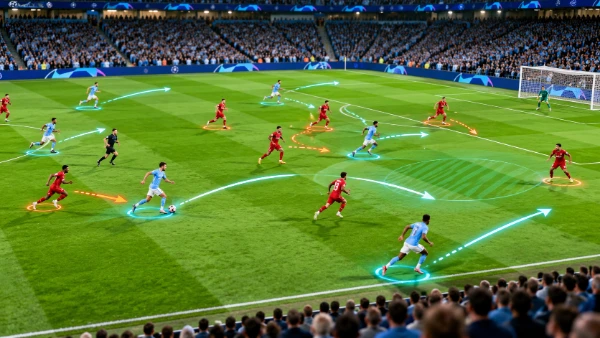
The most visible effect may be uneven match tempo. Teams full of well-rested players could press aggressively from the first whistle, while opponents with several late-returning internationals may control the pace more carefully. Fatigue can also appear through small details rather than dramatic collapse: a delayed defensive step, a loose pass late in a half, fewer overlapping runs or slower movement after losing possession. These moments can decide close opening fixtures. It would be too simple to attribute every mistake to the World Cup, but repeated drops in intensity among heavily used players would be consistent with a limited recovery period.
Early results may be less reliable as a guide to the entire season. Clubs with many World Cup semi-finalists and finalists could drop points while rebuilding fitness, whereas teams with fewer tournament participants may begin sharply and take advantage. Promoted sides often enter the opening round with momentum, a settled group and a clear plan, which could become even more valuable against opponents still integrating international players. By October, the balance may look different. Analysts and supporters should therefore separate structural problems from temporary ones. A slow August does not automatically indicate a failed transfer window or a tactical crisis, just as a fast start does not guarantee lasting strength.
Team sheets may contain more surprises than usual. A leading international could be left out, start on the bench or miss consecutive matches despite having no reported injury. Clubs may provide limited detail because recovery plans involve private medical information, so speculation will fill the gap. The most responsible interpretation is that availability is not the same as full readiness. A player can be capable of appearing for 20 minutes without being prepared for a complete match at maximum intensity. Coaches who resist pressure to select every star immediately may lose short-term options, but they improve the chance of keeping those players effective through autumn and winter.
When Performance Levels May Begin to Stabilise
There will be no single week when post-World Cup fatigue disappears. Players eliminated early may reach normal competitive condition by the first league round, while finalists could need several matches to rebuild sharpness. Those with minor injuries or heavy workloads from the previous club season may take longer. The first four to six weeks should therefore be viewed as a transition rather than a standard pre-season followed by a clean start. Training quality, sleep, nutrition and controlled match minutes will gradually reduce the gap between players, but progress will differ even among team-mates from the same national side.
The return of European club competitions will test whether recovery plans have worked. Once domestic matches are combined with midweek travel, coaches will have fewer uninterrupted training days and less room to correct physical deficits. Players who were rushed in August may struggle when the schedule becomes denser, while those managed carefully could be better prepared for repeated matches. International duty will add another layer later in the autumn. This is why early rotation should be judged over several months, not only by the result of one opening fixture. The objective is to protect performance across the season rather than maximise minutes in the first fortnight.
The 2026/27 season will begin with a clear competitive tension: clubs need immediate results, but many of their most valuable players require patience. La Liga faces the shortest turnaround, while Bundesliga clubs have a little more space before their opening weekend, yet no major league is completely protected from the effects of a 39-day World Cup. The teams most likely to manage the transition well are those with clear communication, realistic selection decisions and enough depth to avoid overusing late returnees. Post-tournament fatigue will not determine every result, but it will be one of the most important hidden factors behind Europe’s opening matches.