Lillestrøm in the 2026/27 Europa League: Four Matchday Results and Play-off Prospects
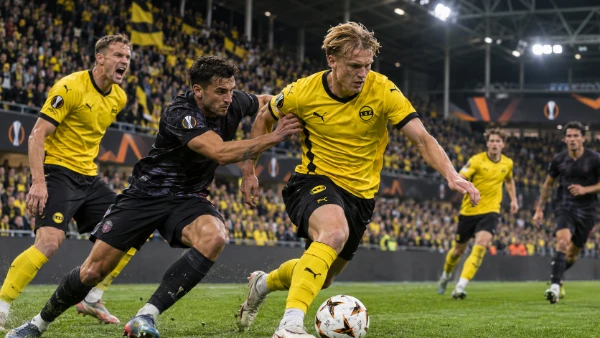
Lillestrøm SK have endured a difficult start to the 2026/27 UEFA Europa League, taking just one point from their opening four league-phase matches. The Norwegian club have suffered defeats against Torreense, Real Sociedad and Viktoria Plzeň, while their only point came from a draw away to Sparta Prague. With two goals scored and ten conceded, Lillestrøm occupy 34th place in the 36-team standings following the fourth matchday on 5 November 2026. Their hopes of reaching the knockout phase remain mathematically alive, but the next four fixtures leave little room for further mistakes. A demanding trip to Lyon is followed by encounters with Levski Sofia, Bournemouth and Celta Vigo, making the closing stages of the league phase a serious examination of the team’s ability to compete against European opposition.
Lillestrøm’s Results After Four Europa League Matchdays
Lillestrøm began their league-phase campaign on 17 September 2026 with a 2-1 home defeat against Portuguese side Torreense. It was a disappointing opening result, particularly because a home fixture offered an early opportunity to collect points before facing more established European opponents. The narrow scoreline suggested a competitive contest, but the outcome immediately increased the importance of the following matches. In a competition where every team plays eight different opponents, losing the opening home game can create considerable pressure. Lillestrøm could still recover from one defeat, although it meant that securing points away from Norway had become more important.
The second match, played on 15 October, produced Lillestrøm’s only positive result of the first four rounds. A 1-1 draw against Sparta Prague in the Czech capital brought their first Europa League point of the season. Taking something from an away fixture against a club with considerable European experience was a useful response to the opening defeat. The result also demonstrated that Lillestrøm were capable of remaining competitive outside Norway. However, the single point did not substantially improve their prospects of qualification. To make meaningful progress towards the top 24, the Norwegian side needed to turn competitive performances into victories rather than rely on occasional draws.
The next two fixtures exposed the difficulty of that task. On 22 October, Lillestrøm suffered a 6-0 home defeat against Real Sociedad, the heaviest result of their campaign so far. The Spanish side’s six goals inflicted serious damage on Lillestrøm’s goal difference, which could prove important if several clubs finish level on points. A fortnight later, on 5 November, Viktoria Plzeň recorded a 1-0 victory in Norway. Although the fourth-round scoreline was much closer, another defeat left Lillestrøm without a home point after three matches at Åråsen. The combined record of three defeats and one draw makes the challenge clear: the club must improve both its scoring record and its ability to prevent opponents from converting opportunities into goals.
What the Four Results Reveal About Lillestrøm’s European Campaign
The numbers present a straightforward picture of Lillestrøm’s opening four matches. The team have scored only twice, with one goal against Torreense and another against Sparta Prague. They have failed to score in their subsequent encounters with Real Sociedad and Viktoria Plzeň. Defensively, ten goals conceded across four games represent an average of 2.5 per match, although six of those came in a single fixture. The 6-0 defeat therefore accounts for most of the damage to their overall defensive record. Even allowing for that exceptional result, Lillestrøm have yet to keep a clean sheet in the league phase, leaving them under pressure to score in almost every match.
Another significant concern is the difference between home and away results. Lillestrøm have played three of their first four European matches at home, losing all three and conceding nine goals in the process. Their only point came on the road against Sparta Prague. This is a particularly awkward situation because the remaining schedule contains three away fixtures and only one home match. Ordinarily, home advantage provides an opportunity to establish momentum and benefit from familiar surroundings. Lillestrøm have not managed to use that advantage so far, and their final home fixture against Bournemouth now carries additional importance. The Norwegian club must find a way to improve its performances regardless of where the matches take place.
The wider context is equally important. Lillestrøm are competing in a league phase containing clubs from several of Europe’s stronger domestic competitions, and their opponents differ considerably in experience, resources and playing styles. The draw against Sparta Prague offers evidence that the team can earn points against established opposition, but one encouraging result cannot outweigh three defeats. Their poor goal difference also makes a recovery more demanding than the points total alone might suggest. If Lillestrøm manage to collect the same number of points as another club, their defensive record could become decisive. The next stage of the campaign therefore requires more than isolated improvements: the Norwegian side need consistent results across consecutive fixtures.
Europa League Standings and Lillestrøm’s Qualification Chances
After four matchdays, Lillestrøm stand 34th in the Europa League table with one point, two goals scored, ten conceded and a goal difference of minus eight. Only Lech Poznań and Ararat-Armenia sit below them in the standings. The Norwegian club have not yet recorded a victory, making their position particularly difficult with half of the league phase already completed. Their low ranking is not simply the consequence of one heavy defeat. The inability to win any of the opening four matches has prevented Lillestrøm from building the points total normally required to compete for a knockout position. Every remaining fixture consequently carries greater importance than it would have at the beginning of the campaign.
The Europa League uses a single 36-team league table rather than traditional groups. Each club faces eight different opponents, playing four matches at home and four away. Three points are awarded for a victory and one for a draw. Teams finishing in the top eight qualify directly for the round of 16, while those placed ninth through 24th enter the knockout phase play-offs. Clubs ranked 25th to 36th are eliminated at the end of the league phase. For Lillestrøm, the realistic objective is therefore to finish among the top 24 rather than pursue direct qualification for the last 16. The difference is significant because even reaching the play-offs would represent a major turnaround from their current position.
Lillestrøm can still finish with a maximum of 13 points if they win their remaining four matches. Three victories would bring their total to ten, while two victories and two draws would give them nine. These figures demonstrate that qualification is still mathematically possible, but none guarantees a place in the top 24. The number of points required will depend on results involving other clubs, and goal difference may become a deciding factor. A full recovery would also require Lillestrøm to achieve something they have not yet managed this season: consecutive European victories. Their prospects should therefore be described as difficult rather than impossible, with the remaining fixtures determining whether their campaign can be rescued.
How Many Points Could Lillestrøm Need to Reach the Play-offs?
There is no fixed points requirement for reaching the Europa League knockout phase play-offs. Qualification depends on finishing 24th or higher after all eight league-phase matches have been completed. With 36 clubs competing against different opponents, the final table can change substantially between matchdays. For Lillestrøm, finishing on four or five points would almost certainly leave them in a vulnerable position, while a stronger sequence of results would give them a better opportunity to compete for qualification. Even a total of seven points would offer limited reassurance given their present goal difference. The sensible target is to win as many of the remaining fixtures as possible rather than calculate qualification around a minimum number of points.
The team’s minus-eight goal difference is an important part of this calculation. Under UEFA’s league-phase ranking rules, goal difference is considered when teams finish with the same number of points. Lillestrøm’s heavy defeat against Real Sociedad has therefore created a disadvantage that could remain relevant until the final round. A narrow victory would still provide three valuable points, but winning by a larger margin could also reduce the risk of losing a position on goal difference. At the same time, the club cannot afford to chase goals recklessly and expose its defence to further heavy defeats. Improving the balance between attacking ambition and defensive security will be essential if qualification remains within reach.
The results of other teams will also influence Lillestrøm’s prospects. Clubs currently occupying positions close to 24th may collect points in November, December and January, gradually raising the total required to progress. Conversely, an uneven distribution of results could keep the final qualifying positions accessible for longer. Lillestrøm have no control over those outcomes, making their own performances the only reliable basis for planning. A victory against Lyon would immediately improve their position and restore some confidence, whereas another defeat would reduce their maximum possible points total to ten. By the time the club face Bournemouth in January, their hopes of advancing could depend on a combination of victories and favourable results elsewhere.
Remaining Fixtures and Lillestrøm’s Route Towards the Knockout Phase
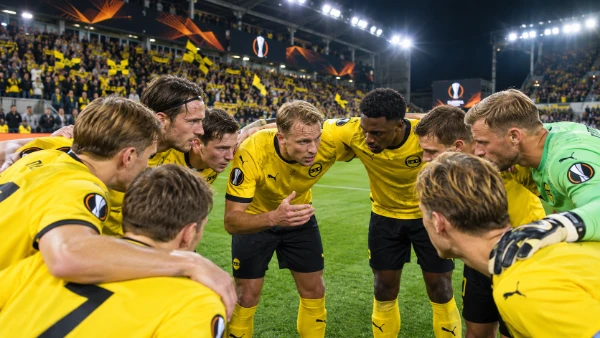
Lillestrøm’s next European match takes place away to Lyon on 26 November 2026. The French club have taken seven points from their opening four Europa League fixtures, recording victories over Anderlecht and Crystal Palace, a defeat against Hoffenheim and a draw with Real Sociedad. Those results illustrate the challenge facing the Norwegian visitors. Lyon have already demonstrated their ability to defeat strong opponents, although their loss in Germany shows that they are not unbeatable. Lillestrøm will need a disciplined performance to remain competitive and avoid allowing the hosts to establish control early in the match. Even a draw would represent progress compared with their recent defeats, but a victory would have considerably greater value for their qualification prospects.
On 10 December, Lillestrøm travel to Bulgaria to face Levski Sofia. This fixture may offer a more realistic opportunity to collect points, although Levski’s results provide no grounds for underestimating them. The Bulgarian side have collected seven points from their first four matches, including victories away to Viktoria Plzeň and at home against Jagiellonia. Their performance against Plzeň is especially relevant because Lillestrøm lost to the same opponent in November. European results against common opponents cannot predict the outcome of a future match, but they illustrate the competitive standard Lillestrøm must reach. A positive result in Sofia could keep the Norwegian club in contention heading into the winter break, provided they have not already fallen too far behind the qualifying places.
The final two fixtures take place in January 2027. Lillestrøm host Bournemouth on 21 January before travelling to Spain to face Celta Vigo on 28 January. Bournemouth have been among the competition’s strongest performers, winning all four of their opening matches and recording victories against Real Sociedad, Sturm Graz, Milan and Sparta Prague. Facing such opponents late in the campaign is a difficult prospect, particularly if Lillestrøm still need maximum points. Celta have experienced a less successful opening period, collecting three points from four matches, but an away fixture against Spanish opposition remains demanding. The final schedule offers no obvious easy match, making the team’s performance during the November and December rounds crucial.
What Lillestrøm Must Improve to Keep Their European Campaign Alive
The most immediate priority is reducing the number of goals conceded. Lillestrøm’s defensive difficulties have been particularly evident at home, and the defeat against Real Sociedad demonstrated how quickly a match can escape their control. The team must become more effective at maintaining its shape when possession changes, protecting dangerous areas near its own penalty box and responding to sustained opposition pressure. These improvements do not require an entirely defensive approach, but they demand greater concentration and better organisation throughout each match. Avoiding early setbacks would also help Lillestrøm remain patient when looking for opportunities to attack. Their draw against Sparta Prague provides a more useful example of competitive resilience than their heavier defeats.
Scoring goals is the second major concern. With just two goals across four fixtures, Lillestrøm have not produced enough attacking output to compensate for defensive mistakes. They have also gone two consecutive Europa League matches without scoring. The remaining opponents will present different challenges, but the Norwegian club cannot rely solely on keeping matches close. They must create opportunities regularly and make better use of promising attacking situations. Set pieces, quick transitions and effective movement around the opposition penalty area could all become important ways of generating chances. However, the team must avoid committing excessive numbers forward when matches remain level, particularly against opponents capable of exploiting space behind the defence.
Lillestrøm enter the second half of their Europa League campaign with a clear understanding of the challenge ahead. One point from four matches, a minus-eight goal difference and 34th place leave them among the least favourably positioned clubs in the competition. Nevertheless, the remaining four fixtures provide an opportunity to improve their record and demonstrate that their European campaign can still develop positively. Qualification for the knockout phase would require an exceptional recovery, beginning with better results against Lyon and Levski Sofia before the decisive January encounters. Even if advancing ultimately proves beyond their reach, stronger performances would carry value for the club’s European experience and its reputation beyond Norway. For now, the essential task is straightforward: Lillestrøm must start winning matches.