NBA 2026: How New Three-Point Shooting Trends Are Influencing Totals Betting
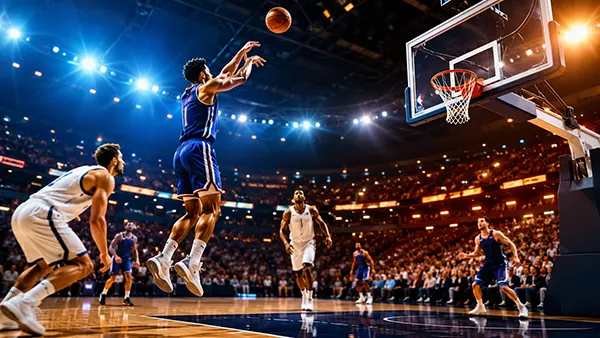
Three-point shooting has transformed NBA basketball over the past decade, but the 2025–26 season has highlighted another important shift. Teams are no longer simply attempting more shots from beyond the arc—they are selecting them more efficiently, spacing the floor differently, and building offensive systems around players capable of creating quality perimeter looks under pressure. These developments have changed how bookmakers assess totals markets and how experienced bettors interpret pre-game lines. Understanding the relationship between shooting profiles, offensive pace, defensive adjustments, and modern analytics has become increasingly valuable when evaluating over and under wagers.
Why Three-Point Volume Alone No Longer Explains NBA Totals
A few years ago, many bettors relied heavily on the number of three-point attempts when analysing totals. While shot volume remains important, it no longer provides a complete picture. Most NBA clubs now generate perimeter opportunities through structured offensive actions rather than simply encouraging every player to shoot. Ball movement, off-ball screening, drive-and-kick sequences and quick transition decisions produce cleaner attempts, increasing overall efficiency without necessarily increasing total shot volume.
Another significant change is roster construction. Many franchises now prioritise versatile forwards capable of defending multiple positions while stretching the floor offensively. This reduces the number of low-efficiency possessions and increases scoring consistency across all four quarters. Rather than depending on one elite shooter, teams frequently deploy four or even five reliable perimeter threats, making defensive rotations considerably more difficult.
Bookmakers have adjusted to these offensive improvements. Modern totals are often several points higher than they were only a few seasons ago, particularly when two fast-paced teams meet. However, higher opening lines do not automatically eliminate betting value. Instead, successful analysis requires understanding whether the projected pace accurately reflects each team’s current offensive identity and recent tactical adjustments.
Efficiency Has Become More Valuable Than Raw Attempt Numbers
Effective field goal percentage, true shooting percentage and points scored per possession now provide better insight than simply counting three-point attempts. A club that attempts thirty-five threes while converting 42% of them creates a far different scoring environment from one taking forty-five difficult attempts at 32% efficiency. Modern offensive systems increasingly favour quality over quantity.
Spacing has also improved because centres have expanded their shooting range. Traditional rim protectors are now frequently required to defend outside the paint, opening driving lanes that create additional high-value shots. Even when the final possession does not end with a three-pointer, the threat of perimeter shooting increases scoring efficiency throughout the offence.
Another consideration is late-game strategy. Close contests often produce intentional fouls during the final minute, extending the game beyond normal playing time. When efficient three-point shooting keeps the score within one or two possessions, these situations become more common and can significantly affect totals that appear comfortably under the line entering the closing moments.
How Pace, Shot Distribution and Defensive Schemes Affect Over and Under Markets
Possession count remains one of the strongest drivers of NBA totals, but modern pace should never be analysed in isolation. Two teams may average nearly identical numbers of possessions per game while producing very different scoring totals. The difference often lies in shot selection. Teams generating a high percentage of corner threes, transition opportunities and uncontested perimeter attempts typically achieve greater offensive efficiency than those relying heavily on contested mid-range jumpers.
Coaching philosophy has also become increasingly influential. Several organisations encourage quick decisions during the first eight seconds of the shot clock whenever a favourable shooting opportunity appears. Others prefer longer offensive possessions designed to force defensive mismatches before attacking. Bettors evaluating totals should therefore examine not only season-long pace statistics but also recent tactical adjustments, particularly after coaching changes or significant injuries.
Defensive flexibility has improved across the league as well. Switching across multiple positions, aggressive close-outs and sophisticated help-defence rotations have reduced the effectiveness of predictable perimeter offences. Teams capable of limiting open catch-and-shoot opportunities often slow scoring even against opponents with elite offensive ratings. This explains why games featuring strong defensive versatility sometimes finish below expectations despite involving two prolific offences.
Situational Factors Often Matter More Than Season Averages
Scheduling continues to influence offensive production. Teams playing the second game of a back-to-back frequently experience reduced shooting accuracy due to accumulated fatigue, particularly on longer road trips. Three-point percentage tends to fluctuate more noticeably under these conditions because perimeter shooting depends heavily on consistent leg strength and timing.
Injuries deserve equally careful attention. The absence of a primary ball-handler can reduce the quality of perimeter opportunities even if elite shooters remain available. Conversely, losing a defensive specialist may create additional open looks for the opposition without dramatically affecting offensive production. Understanding each player’s tactical role is considerably more informative than focusing solely on points per game.
Recent form should also be interpreted carefully. A team converting an unusually high percentage of contested three-pointers across several matches may simply be experiencing positive shooting variance rather than demonstrating sustainable improvement. Likewise, temporary cold shooting rarely continues indefinitely when offensive shot quality remains consistently strong. Distinguishing sustainable tactical changes from short-term statistical fluctuations is one of the most valuable skills when assessing totals markets.

How Pace, Shot Distribution and Defensive Schemes Affect Over and Under Markets
Possession count remains one of the strongest drivers of NBA totals, but modern pace should never be analysed in isolation. Two teams may average nearly identical numbers of possessions per game while producing very different scoring totals. The difference often lies in shot selection. Teams generating a high percentage of corner threes, transition opportunities and uncontested perimeter attempts typically achieve greater offensive efficiency than those relying heavily on contested mid-range jumpers.
Coaching philosophy has also become increasingly influential. Several organisations encourage quick decisions during the first eight seconds of the shot clock whenever a favourable shooting opportunity appears. Others prefer longer offensive possessions designed to force defensive mismatches before attacking. Bettors evaluating totals should therefore examine not only season-long pace statistics but also recent tactical adjustments, particularly after coaching changes or significant injuries.
Defensive flexibility has improved across the league as well. Switching across multiple positions, aggressive close-outs and sophisticated help-defence rotations have reduced the effectiveness of predictable perimeter offences. Teams capable of limiting open catch-and-shoot opportunities often slow scoring even against opponents with elite offensive ratings. This explains why games featuring strong defensive versatility sometimes finish below expectations despite involving two prolific offences.
Situational Factors Often Matter More Than Season Averages
Scheduling continues to influence offensive production. Teams playing the second game of a back-to-back frequently experience reduced shooting accuracy due to accumulated fatigue, particularly on longer road trips. Three-point percentage tends to fluctuate more noticeably under these conditions because perimeter shooting depends heavily on consistent leg strength and timing.
Injuries deserve equally careful attention. The absence of a primary ball-handler can reduce the quality of perimeter opportunities even if elite shooters remain available. Conversely, losing a defensive specialist may create additional open looks for the opposition without dramatically affecting offensive production. Understanding each player’s tactical role is considerably more informative than focusing solely on points per game.
Recent form should also be interpreted carefully. A team converting an unusually high percentage of contested three-pointers across several matches may simply be experiencing positive shooting variance rather than demonstrating sustainable improvement. Likewise, temporary cold shooting rarely continues indefinitely when offensive shot quality remains consistently strong. Distinguishing sustainable tactical changes from short-term statistical fluctuations is one of the most valuable skills when assessing totals markets.