NBA Play-In Tournament 2026: Does the Format Change Team Strategy?
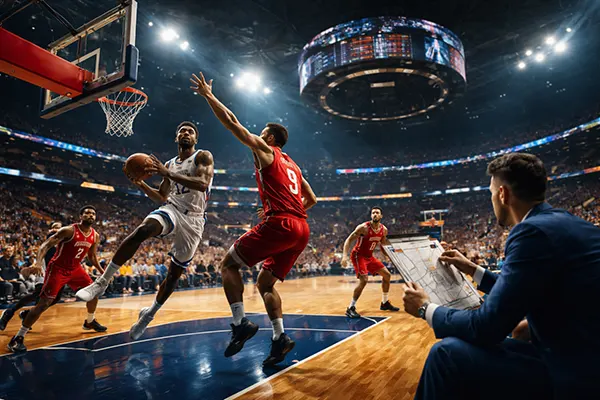
The NBA Play-In Tournament has firmly established itself as a defining feature of the modern league structure. By 2026, teams no longer treat it as an experimental add-on but as a critical stage that directly influences roster management, tactical decisions, and long-term planning. The format, which determines the final playoff spots through high-pressure single or double elimination games, forces franchises to rethink how they approach the regular season and postseason preparation.
How the Play-In Format Reshapes the Regular Season Approach
The introduction of the Play-In Tournament has altered how teams prioritise wins throughout the regular season. Franchises positioned between the 7th and 10th seeds now operate under a different level of urgency, knowing that a late-season slump can push them into a volatile elimination scenario. This has led to fewer instances of resting key players during critical stretches, especially in March and April.
Coaches increasingly manage rotations with the Play-In in mind, balancing player fatigue with the need to secure a higher seed. The difference between finishing 7th and 9th is substantial, as it determines how many chances a team has to qualify for the playoffs. As a result, tactical adjustments are often made earlier in the season to stabilise performance consistency.
Front offices also factor in the Play-In when constructing rosters. Depth has become more valuable, as teams anticipate the possibility of playing additional high-intensity games before the official playoff series begins. This has influenced transfer decisions, particularly at the trade deadline, where contenders aim to strengthen bench reliability rather than focus solely on star power.
Impact on Player Load Management and Rotation Decisions
Load management strategies have evolved significantly under the Play-In structure. While preserving star players remains important, teams are now more cautious about resting them in games that directly impact Play-In positioning. Missing out on a top-six seed can mean facing elimination scenarios that negate the benefits of rest entirely.
Coaching staffs are also adjusting minute distribution across the roster. Secondary players receive more responsibility earlier in the season to ensure they are prepared for potential Play-In games, which often demand immediate high-level performance without adjustment time. This approach helps mitigate risks associated with fatigue or injury.
Another noticeable shift is the increased emphasis on game-specific preparation. Teams treat late-season matchups against direct competitors as tactical rehearsals, analysing matchups and defensive schemes that may be reused during the Play-In stage. This level of planning reflects how seriously the format is now taken across the league.
Tactical Changes in High-Stakes Play-In Games
The Play-In Tournament differs from traditional playoff series due to its short format, which leaves little room for adaptation. Teams must deliver immediate results, often relying on pre-planned strategies rather than gradual adjustments. This has led to a rise in simplified offensive schemes designed to maximise efficiency under pressure.
Defensively, coaches prioritise containment of key opponents rather than broader system execution. With limited time to adapt, shutting down one primary scorer can determine the outcome of the entire game. As a result, defensive matchups are often more aggressive and tailored than during the regular season.
Another key factor is tempo control. Teams that can dictate the pace tend to perform better in Play-In scenarios, as it reduces unpredictability. Slower, more controlled possessions are commonly used to minimise turnovers and limit transition opportunities for opponents.
Role of Coaching Decisions Under Pressure
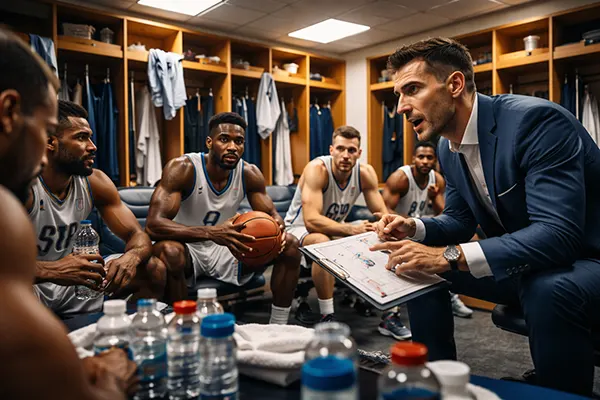
Coaching decisions carry greater weight in the Play-In Tournament due to the absence of a multi-game safety net. Timeout usage, substitution timing, and late-game play-calling often determine whether a team advances or exits. Coaches must rely on preparation and instinct rather than extended analysis.
There is also a noticeable increase in reliance on experienced players during crucial moments. Even if younger athletes have performed well during the season, coaches often turn to veterans who are more accustomed to high-pressure situations. This reflects the importance of psychological stability in single-game eliminations.
In addition, teams are more willing to deviate from standard rotations. Shorter benches and extended minutes for top performers are common, as the immediate objective outweighs long-term considerations. This contrasts with traditional playoff series, where endurance across multiple games is a key factor.
Long-Term Strategic Implications for NBA Teams
By 2026, the Play-In Tournament has influenced not only short-term tactics but also broader organisational strategies. Teams now plan entire seasons with multiple qualification paths in mind, recognising that finishing outside the top six does not necessarily end playoff ambitions.
This shift has impacted how franchises evaluate success. Reaching the Play-In stage is often considered a meaningful achievement for developing teams, providing valuable experience for younger players. It also creates additional opportunities for revenue and exposure, which organisations factor into their planning.
Scouting and analytics departments have adapted as well. Greater emphasis is placed on identifying players who perform effectively in high-pressure, limited-sample scenarios. This includes athletes with strong decision-making skills, defensive versatility, and the ability to execute under time constraints.
How the Format Influences Team Building and Transfers
The presence of the Play-In Tournament has changed how teams approach roster construction. Rather than focusing exclusively on building a starting lineup capable of sustaining a long playoff run, franchises now value adaptability and depth that can handle sudden elimination games.
Transfer strategies increasingly target players who can contribute immediately without requiring extended integration periods. Mid-season acquisitions are expected to fit seamlessly into existing systems, as there may be little time to adjust before critical games begin.
Finally, the Play-In format has encouraged a more competitive league environment overall. Teams that might previously have disengaged late in the season now remain active contenders for postseason qualification. This has raised the overall intensity of the regular season and reinforced the importance of strategic planning at every level of the organisation.